The Psychology Behind Logical Challenges: How They Impact Our Perception and Decision-Making
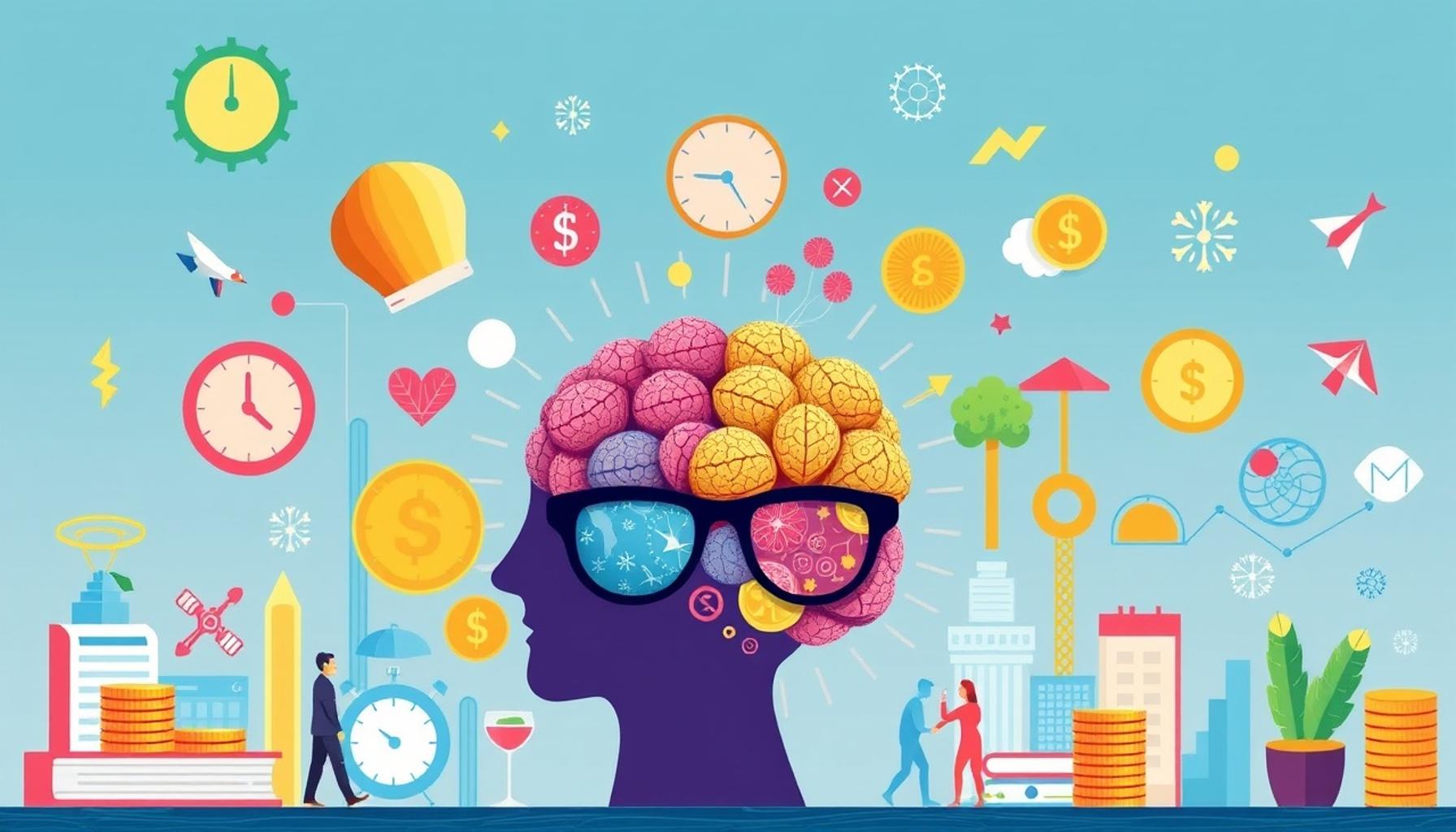
The Intricacies of Decision-Making
Each day, we are bombarded with decisions, from the mundane to the monumental. The way we process these choices isn’t as straightforward as it seems. Understanding the psychology behind logical challenges reveals significant insights into our perception and the underlying mechanisms influencing our decisions.
The Role of Logic in Our Thoughts
Logical challenges can either stimulate our thinking or lead to misjudgments. Here are some key points to consider:
- Cognitive Bias: Our brains often rely on mental shortcuts, known as heuristics, which can distort reasoning. For example, the anchoring bias can cause us to give disproportionate weight to the first piece of information we encounter, impacting decisions in settings such as job offers or purchase prices.
- Emotional Influence: Feelings can cloud logical thinking. When making decisions during heightened emotional states—such as fear or excitement—individuals may overlook vital details or adopt an overly optimistic perspective, leading to choices that might not align with their long-term interests.
- Social Pressure: Group dynamics can sway individual decisions, regardless of logic. This phenomenon is often observed in corporate environments, where individuals may conform to team consensus rather than voice dissenting opinions, even when they recognize flaws in the proposed strategies.
These elements reflect not just individual behavior but also societal trends. For example, during crucial economic decisions, such as stock market investments, the role of public perception can significantly alter outcomes. Investor sentiments can drive market volatility, often more powerfully than the underlying economic data. Investigating how these psychological factors intertwine with logic sheds light on the complexity of human behavior.
Why It Matters
Understanding the impact of logical challenges is crucial. It enables individuals to:
- Make informed choices in personal and professional spheres. In a world where information is abundant, discerning what truly matters can be a skill that sets successful individuals apart from others.
- Spot biases and enhance critical thinking. By recognizing biases such as confirmation bias, where individuals favor information that confirms preexisting beliefs, we can develop a more rounded perspective on important issues.
- Adopt strategies for better decision-making. Techniques such as utilizing decision matrices, scenario planning, or even consulting diverse perspectives can lead to better outcomes in complex situations.
This article delves into these fascinating aspects, providing a roadmap for navigating the intricate landscape of reasoning and choice. Moreover, by embracing an awareness of how psychological factors influence our decisions, we empower ourselves to make choices that are not only logically sound but also aligned with our values and goals. Emphasizing the importance of being mindful can encourage a more thoughtful and informed populace, ultimately leading to more effective personal and communal outcomes.

DISCOVER MORE: Click here to dive deeper
Navigating the Web of Logic and Emotion
In the pursuit of effective decision-making, recognizing the interplay between logic and emotion is paramount. Logical challenges often test our cognitive abilities and lead to complex outcomes that can shape our lives significantly. Multiple psychological components come into play when individuals face situations requiring critical thought. These elements inevitably color our perception and influence how we arrive at conclusions.
Neuroscience of Decision-Making
Research in cognitive psychology has provided profound insights into how our brains process decisions. Understanding the neuroscience behind decision-making is essential to recognize the impact of logical challenges:
- Brain Regions at Play: The prefrontal cortex, often referred to as the “executive center” of the brain, plays a crucial role in reasoning and analytical thought. This area collaborates with the amygdala, which processes emotions. When making decisions, this interplay can create friction—calm logical reasoning can be overridden by emotional responses during stressful situations, illustrating why individuals sometimes make choices that defy rational explanations.
- Cognitive Dissonance: This psychological phenomenon occurs when individuals experience discomfort from holding conflicting beliefs or attitudes. For instance, an investor might believe that their chosen stock is going to increase in value but simultaneously see evidence suggesting otherwise. To resolve this dissonance, the investor may rationalize their choice, leading to a decision that is emotionally driven rather than logically sound.
- Loss Aversion: Research shows that individuals often prefer avoiding losses to acquiring equivalent gains. This inherent bias can manifest in risk-averse behaviors when faced with choices that could lead to financial setbacks, prompting people to cling to familiar but less rewarding options rather than pursuing potentially beneficial changes.
These concepts underscore the complex dance between logic and emotion in the realm of decision-making. Recognizing these patterns can equip us with the tools needed to confront issues pragmatically. As we navigate various choices, it becomes evident that understanding our psychological tendencies directly impacts our ability to think critically.
The Role of Experience and Knowledge
Our past experiences and the depth of our knowledge significantly shape how we approach logical challenges. Several factors highlight this influence:
- Expertise: Individuals with extensive experience in specific domains, such as finance or healthcare, tend to leverage their knowledge in making informed decisions. Their familiarity allows for quicker logical reasoning, reducing reliance on emotional triggers.
- Shared Knowledge: Conversations with peers and exposure to diverse perspectives can further illuminate logical challenges, providing insights that help in framing arguments and evaluating options.
- The Role of Education: Critical thinking training and formal education can enhance one’s ability to dissect logical challenges. As individuals develop problem-solving frameworks, they often make more objective and lesser emotionally-driven choices.
Incorporating the psychology of our experiences into the framework of logical challenges sheds light on the pathways that inform our conclusions. As we delve deeper into understanding decision-making, it becomes clear that both the cognitive aspects and emotional elements play indispensable roles in shaping how we perceive reality.
When faced with logical challenges, our cognitive processes are put to the test, revealing the intricate workings of human psychology. These challenges can manifest in puzzles, riddles, or real-life decision-making dilemmas, prompting us to evaluate the information presented critically. Understanding how we approach these challenges is crucial, as they often illuminate biases that shape our perceptions and influence our decisions.One significant aspect of this psychology is the role of heuristics, or mental shortcuts, that we employ to navigate complex information quickly. While heuristics can be effective, they can also lead to systematic errors in judgment known as cognitive biases, impacting our choices. For example, the anchoring effect illustrates how our initial exposure to a piece of information, such as a particular number or idea, can unduly affect our subsequent decisions. This bias often emerges in financial settings, where initial price points can influence our perception of value, causing us to make suboptimal choices later on.Another critical element is the concept of framing, which refers to the way information is presented. Research has shown that the framing of decisions can significantly affect outcomes, even when the underlying information remains unchanged. For instance, individuals may react differently to a scenario where a product is marketed as “80% fat-free” versus “contains 20% fat.” Such subtle differences can impact our evaluations and choices, revealing how our perceptions are molded not only by the information we receive but by how it is conveyed.Moreover, emotional responses play a vital role in logical challenges. The interplay between emotion and logic can cloud our decision-making landscape, further complicating the analysis of any challenge. For instance, an emotionally charged environment might lead to rash decisions rather than thoughtful deliberation, as stress levels rise and logical reasoning fades. As individuals engage with logical challenges, they are also provided with an opportunity for growth. These scenarios encourage critical thinking, resilience, and adaptability. Embracing the complexity of decision-making not only sharpens our cognitive abilities but also enhances our understanding of ourselves and the world around us. The next time you encounter a logical challenge, ponder the psychological intricacies at play, and consider how your perception is shaped by various factors. This awareness can transform your approach to challenges, fostering improved decision-making strategies and insights into your cognitive processes. To further explore these themes, here is a structured overview of the advantages related to understanding logical challenges and their psychological implications:
| Category | Description |
|---|---|
| Enhanced Critical Thinking | Challenging scenarios stimulate greater analysis and reasoning skills. |
| Awareness of Biases | Understanding cognitive biases helps in making more rational decisions. |
| Improved Problem-Solving | Logical challenges enhance one’s ability to solve complex problems effectively. |
| Increased Resilience | Facing challenges builds mental toughness and adaptability to new situations. |
Understanding these dynamics not only enriches our perspectives on decision-making but also equips us to navigate challenges with a more informed and analytical mindset.
DIVE DEEPER: Click here to explore the evolution of strategy games
The Influence of Social Dynamics
In the intricate tapestry of decision-making, the impact of social dynamics cannot be overlooked. How we perceive logical challenges and make decisions is deeply intertwined with the influence of others around us, often swaying our emotions and thoughts in unexpected ways. Here, we unpack the psychological mechanisms that illustrate this influence:
Social Conformity
One of the most powerful psychological phenomena affecting decision-making is social conformity. Research has shown that individuals are often inclined to align their opinions and decisions with those of a group. This can lead to a phenomenon known as the “bandwagon effect,” where people adopt a belief simply because others endorse it, regardless of their own logical assessment. For instance, during economic downturns, if prominent public figures or peers express pessimism about market growth, individuals may echo those sentiments despite personal insights suggesting otherwise.
Groupthink Syndrome
Groupthink, a term coined by social psychologist Irving Janis, refers to the tendency of cohesive groups to prioritize harmony over critical evaluation of ideas. This can result in decisions that overlook available logical alternatives. In corporate boardrooms, for example, when team members prioritize consensus over dissent, they may fail to analyze risks effectively, leading to significant financial implications. Understanding this psychological bias can aid individuals in resisting the pressures of conformity and promoting a culture of open dialogue and critical discussion.
Peer Pressure and Risk-Taking
The impact of peer pressure on decision-making extends into domains such as consumer behavior and risk assessment. Adolescents and young adults, for instance, may engage in risk-taking behaviors attributable to the desires to fit in or gain social acceptance. This could lead to choices that are less rational, such as overspending on trends heavily promoted by influencers, rather than making informed decisions based on budget constraints and needs. The psychological impetus to belong can often overshadow logical evaluations, blending emotional responses with cognitive processes.
The Role of Emotional Contagion
Emotional contagion, the phenomenon where individuals subconsciously mimic the emotions of those around them, plays a significant role in collective decision-making. For instance, during heated political discussions, the anxiety or enthusiasm displayed by others can alter one’s perception of logical challenges, leading to polarized views. This interplay emphasizes the need to remain aware of emotional influences during crucial decision-making processes, promoting a more rational and less emotionally driven approach.
Information Overload and Cognitive Overwhelm
In our increasingly interconnected world, the abundance of information can often result in cognitive overwhelm, complicating logical challenges. Behavioral economists like Daniel Kahneman have highlighted the detrimental effects of information overload on decision-making capabilities. When faced with an excess of data, individuals may resort to heuristics—mental shortcuts that simplify complex decisions—potentiating biases that can lead to poor outcomes. For example, consumers researching products might become paralyzed by too many options, leading either to indecision or to choices based on superficial factors rather than comprehensive evaluation.
Understanding the various ways social dynamics shape our decision-making processes adds layers to our perception of logical challenges. As we become more aware of these influences, we open ourselves up to enhancing our critical thinking skills and arriving at more balanced, rational conclusions in both personal and professional contexts.
DIVE DEEPER: Click here to uncover the benefits of brain teasers
Conclusion
In navigating the complex landscape of decision-making, understanding the psychology behind logical challenges reveals profound insights into our behaviors and judgments. As we explored, the interplay of factors such as social dynamics, emotional influences, and cognitive overload shape not only how we perceive challenges but also how we ultimately decide. The realization that our choices are often swayed by the norms and emotions of those around us underscores the importance of fostering environments conducive to critical thinking and open dialogue.
Empowering ourselves with knowledge about groupthink, conformity, and the impacts of peer pressure can transform our approach to decision-making. Acknowledging these psychological phenomena allows us to mitigate their effects, leading to more informed and rational outcomes. As we are bombarded with information, recognizing the dangers of information overload further equips us to sift through data thoughtfully, reducing the likelihood of analysis paralysis.
Ultimately, the challenge lies in enhancing our awareness of not just the logical elements at play, but also the emotional and social undercurrents that influence our decisions. By doing so, individuals can cultivate more robust critical thinking skills that transcend mere reactions, provoking a deeper engagement with the logical challenges we face daily. In this journey of understanding, we lay the foundation for more effective, impactful, and conscientious decision-making in both personal and professional realms.
Related posts:
Classic Logical Challenges: Solving Puzzles that Test Your Mind
Logical Challenges and Artificial Intelligence: Exploring How Machines Solve Puzzles
Logical Challenges in Teams: Strengthening Collaboration Through Reasoning Games
The Importance of Logical Challenges in Developing Critical Thinking in Children
Deconstructing Modern Puzzles: The Influence of Technology on Logical Challenges
Unraveling Logical Challenges: How to Improve Your Reasoning Skills

Linda Carter is a writer and puzzle expert specializing in mind games, brain teasers, and cognitive challenges. With extensive experience helping individuals enhance their problem-solving skills and think critically, Linda shares her knowledge on our platform. Her goal is to empower readers with practical advice, engaging puzzles, and strategies to sharpen their minds and achieve success in the captivating world of mind games and puzzles.