The Importance of Logical Challenges in Developing Critical Thinking in Children

Unlocking the Benefits of Logical Challenges for Children
In today’s rapidly changing world, developing strong critical thinking skills in children is more important than ever. Logical challenges represent a vital component in nurturing these skills. By engaging with puzzles and problem-solving activities, children learn to analyze information effectively, a skill that is increasingly valuable in an era dominated by technology and vast information. These activities not only stimulate cognitive development but also prepare children for real-world challenges.
Enhancing Problem-Solving Abilities
One primary advantage of logical challenges is their ability to enhance problem-solving abilities. When faced with a complex puzzle, children must devise strategies to break down the problem into manageable parts. This process can be likened to the mathematical concepts they encounter in the classroom. For instance, Sudoku puzzles require players to think critically about number placements, reinforcing mathematical logic in a fun and engaging way. By fostering these skills early, children not only excel academically but also cultivate a mindset that will serve them throughout their lives.
Improving Decision-Making Skills
Another significant benefit is the improvement of decision-making skills. Logical reasoning encourages children to weigh options and consider outcomes methodically. For example, games like chess or checkers teach young minds to anticipate their opponent’s moves, fostering foresight and strategic thinking. This ability to analyze consequences and predict future scenarios translates to everyday decisions, equipping children with the confidence to make informed choices.
Fostering Creativity
Interestingly, overcoming logical challenges can also promote creativity. Rather than imposing limits, logical puzzles encourage innovative thinking and flexibility. When children tackle diverse problems, from artistic tasks to engineering challenges, they learn to approach situations from multiple perspectives. For instance, building a bridge with limited materials in a school project requires creative thought combined with engineering principles. This blend of creativity and logic is crucial in fields like technology and the arts, driving innovation and developing well-rounded individuals.
The Academic Advantage
Moreover, exposure to logical tasks can lead to impressive academic success. Studies have shown that children who regularly engage in these activities tend to excel in STEM subjects, which combine science, technology, engineering, and mathematics. Critical thinking promotes intrinsic motivation and curiosity, key traits that propel students toward learning. As such, the emphasis on reasoning will not only assist them in their education but also shape them into insightful and thoughtful adults.
Resources for Engaging Young Minds
In the quest for effective methods to promote critical thinking, introducing logical challenges can be both an exciting and educational experience for children. Whether through interactive games, engaging riddles, or structured activities such as escape rooms, parents and educators alike can discover numerous resources to inspire young minds. For example, websites like Khan Academy and educational apps provide a variety of math and logic games tailored to different age groups, making learning both accessible and enjoyable.
In sum, integrating logical challenges into children’s routines is not merely an academic exercise; it’s a foundational step toward developing a generation of capable, creative, and critical thinkers. By recognizing the importance of these skills, we can ensure that young minds are equipped to thrive in an increasingly complex world.
DISCOVER MORE: Click here to learn about the impact of memory tests
Building a Foundation for Logical Reasoning
Logical challenges serve as a cornerstone for children in developing their critical thinking abilities. These challenges encourage young minds to engage deeply with the material, fostering reasoning skills that are essential for logical reasoning. When children encounter puzzles and problems, they are not merely working towards a solution; they are also cultivating an analytical mindset that will be instrumental in their daily lives.
The Role of Logic in Everyday Life
Understanding and navigating the world around them becomes simpler for children who have engaged with logical challenges. With the ability to think critically, they can assess situations and make choices based on reasoning rather than impulse. For example, when faced with a dilemma at school, such as choosing team members for a project, a child with strong critical thinking skills can evaluate their peers’ strengths and weaknesses effectively. This analysis helps them form better decisions, ensuring success for the group as a whole.
Diverse Types of Logical Challenges
Engaging children in a variety of logical challenges can be particularly beneficial. Here are some effective methods that can be easily integrated into their routine:
- Puzzles and Brain Teasers: Activities like crossword puzzles and logic riddles stimulate cognitive skills while offering an entertaining challenge.
- Board Games: Strategic games like Monopoly or Settlers of Catan encourage negotiation and decision-making through problem resolution.
- Interactive Science Experiments: Hands-on activities allow children to hypothesize and test their theories, building both critical thinking and scientific skills.
- Math Challenges: Engaging with mathematical problems not only bolsters their numeracy skills but also sharpens their logical reasoning capabilities.
Long-Term Benefits of Critical Thinking
Engaging with logical challenges from a young age sets a trajectory for lifelong learning and adaptability. Children develop an inclination toward inquiry and curiosity, driving them to seek deeper understanding in their later educational endeavors. Research has indicated that children who regularly participate in logical challenges perform better academically in subjects such as mathematics and science. This academic advantage not only boosts self-esteem but also encourages a positive mental attitude towards learning.
Encouragement and Support from Adults
For logical challenges to be effective, adult involvement is crucial. Parents and teachers must cultivate an environment that emphasizes the value of critical thinking. This can be achieved through supportive dialogue, providing constructive feedback, and sharing in the problem-solving process. Encouragement leads to resilience; when children learn from their mistakes during these challenges, they start to view setbacks as stepping stones toward growth.
Ultimately, the role of logical challenges in developing critical thinking cannot be overstated. They not only enhance cognitive skills in the present but also prepare children for complex decision-making in their future endeavors. By investing time and resources into these activities, we are equipping the next generation with the necessary tools to navigate an increasingly intricate world.
The Importance of Logical Challenges in Developing Critical Thinking in Children
Logical challenges play a pivotal role in nurturing critical thinking skills among children. Engaging in activities that stimulate logical reasoning can significantly enhance a child’s ability to analyze situations and make informed decisions. By presenting children with puzzles, riddles, and problem-solving tasks, parents and educators can create opportunities for cognitive development.One of the key benefits of introducing logical challenges is instilling a sense of curiosity in children. When faced with a logical problem, children naturally become intrigued and motivated to seek solutions. This intrigue not only keeps them engaged but also promotes a mindset of inquiry where questioning becomes a fundamental part of learning. Children learn to assess various outcomes based on the information provided, enabling them to define their own reasoning methods.Furthermore, logical challenges enhance collaborative skills. Working together with peers on logical tasks encourages communication, discussion, and teamwork. Children learn to express their thoughts, listen to others, and build upon ideas, which fosters a more profound understanding of the material at hand. This collaborative environment often leads to a multicultural exchange of ideas, allowing children to appreciate different perspectives.Additionally, logical challenges provide a safe space for making mistakes. Allowing children to explore various solutions without the fear of failure encourages resilience and perseverance. They learn to approach problems from multiple angles and understand that failure is often an integral part of the learning process.Incorporating activities that promote logical thinking is essential for a child’s overall cognitive growth. It primes their brain for future challenges and prepares them for academic and real-world scenarios. By fostering critical thinking skills, logical challenges help children become not just learners, but innovators who can navigate complex problems in their daily lives.
| Category 1 | Category 2 |
|---|---|
| Cognitive Development | Enhances problem-solving skills and creativity. |
| Emotional Intelligence | Builds resilience and coping mechanisms through problem-solving. |
DIVE DEEPER: Click here to uncover the secrets of AI puzzle-solving
Fostering Creativity and Innovation Through Logical Challenges
While logical challenges predominantly enhance critical thinking, they also play a pivotal role in stimulating creativity and innovation. When children are encouraged to think logically, they learn to approach problems from multiple angles, generating diverse solutions. This exploratory process nurtures their imagination, enabling them to devise unique strategies when confronted with both academic and real-life challenges.
The Intersection of Logic and Creative Thinking
Recent studies suggest that children who regularly engage in logical challenges demonstrate stronger creative problem-solving abilities. For instance, the National Endowment for the Arts highlights that creative individuals tend to possess high levels of critical thinking skills, which allow them to reconsider norms and innovate beyond conventional boundaries. By integrating logical puzzles and tasks into their play or study routines, children can enhance both their critical and creative thinking capabilities. This dual skill set is invaluable in today’s fast-paced, ever-evolving world, which increasingly values creative solutions alongside analytical precision.
Collaborative Problem Solving
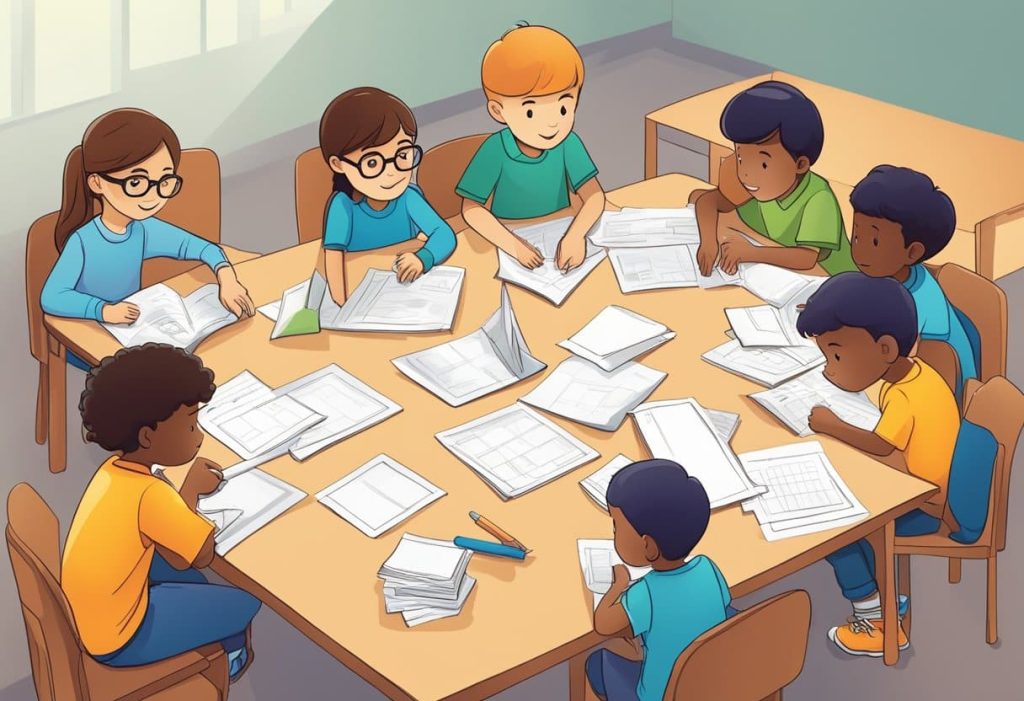
Logical challenges often encourage teamwork, providing children with opportunities to collaborate and communicate with their peers. Activities such as group-based science projects or team-oriented logic games like Escape Rooms not only teach children how to approach problems together but also how to leverage each other’s strengths. This collaboration can enhance social skills, including empathy and effective communication, which are crucial for success in both personal and professional life later on.
Real-World Applications of Critical Thinking Skills
Critical thinking skills cultivated through logical challenges empower children to interpret complex events and make well-informed decisions as they grow older. For instance, consider a child learning about environmental issues: through critical analysis, they can evaluate the effects of pollution or climate change critically. This ability to analyze real-world scenarios fosters responsible citizenship, as children become equipped to make choices that benefit not only themselves but society at large. The economic implications of their decisions, whether in politics or consumer behavior, underscore the importance of nurturing these skills early on.
Integrating Technology and Logical Challenges
In the modern classroom, the fusion of technology with logical challenges offers innovative ways to engage children. Interactive apps and online platforms that focus on coding, logic games, or robotics provide immersive experiences that challenge children’s reasoning abilities. For instance, platforms like Code.org and Kahoot! introduce children to coding concepts through gaming, enhancing both logical reasoning and critical thinking. These technology-integrated challenges not only make learning fun but also prepare children for a tech-driven future.
The Impact of Diverse Experiences
Finally, it is essential to consider how diverse experiences contribute to the development of critical thinking through logical challenges. Exposure to different cultures, histories, and perspectives allows children to analyze situations contextually. For instance, participating in community service projects or engaging in cultural exchanges provides opportunities to confront real-world dilemmas actively. These varied experiences stimulate critical thinking by inviting children to consider multiple viewpoints, fostering a deeper understanding of complex issues.
Integrating logical challenges into children’s daily routines goes beyond improving their critical thinking; it also accumulates essential life skills that are crucial for personal and professional accomplishments. By cultivating a problem-solving mindset, children gain a competitive edge in a world that increasingly demands creative thinkers and strategic planners.
DIVE DEEPER: Click here to learn more
Conclusion: The Lasting Impact of Logical Challenges on Child Development
In a world that increasingly values critical thinking and problem-solving skills, the importance of logical challenges in childhood development cannot be overstated. By engaging children in activities that require logical reasoning, we equip them with not only the ability to think analytically but also the skills necessary to navigate the complexities of modern life. These challenges foster a growth mindset, encouraging young learners to approach problems creatively and collaboratively.
Furthermore, as children delve into logical puzzles and team-based challenges, they enhance their social skills, gain confidence, and develop a more profound understanding of diverse perspectives. The ability to analyze real-world issues, from environmental to social challenges, empowers them to become responsible and informed citizens who can contribute positively to their communities.
As educators and parents, integrating logical challenges into daily routines—whether through interactive technology, group activities, or even everyday problem-solving scenarios—can profoundly shape our children’s futures. Investing time in nurturing these skills ensures that we are not merely preparing children for academic success; we are equipping them to thrive in an ever-evolving world. Therefore, prioritizing logical challenges in their formative years is an essential step toward raising a generation of thoughtful, innovative, and capable individuals.
Related posts:
Logical Challenges and Education: Incorporating Reasoning Games in Elementary Education
The Evolution of Logical Challenges Throughout History: From Ancient Structures to Modern Games
Classic Logical Challenges: Solving Puzzles that Test Your Mind
Logical Challenges and Neuroscience: What Happens in Our Brain When Solving Puzzles
Logical Challenges in Teams: Strengthening Collaboration Through Reasoning Games
Unraveling Logical Challenges: How to Improve Your Reasoning Skills

Linda Carter is a writer and puzzle expert specializing in mind games, brain teasers, and cognitive challenges. With extensive experience helping individuals enhance their problem-solving skills and think critically, Linda shares her knowledge on our platform. Her goal is to empower readers with practical advice, engaging puzzles, and strategies to sharpen their minds and achieve success in the captivating world of mind games and puzzles.