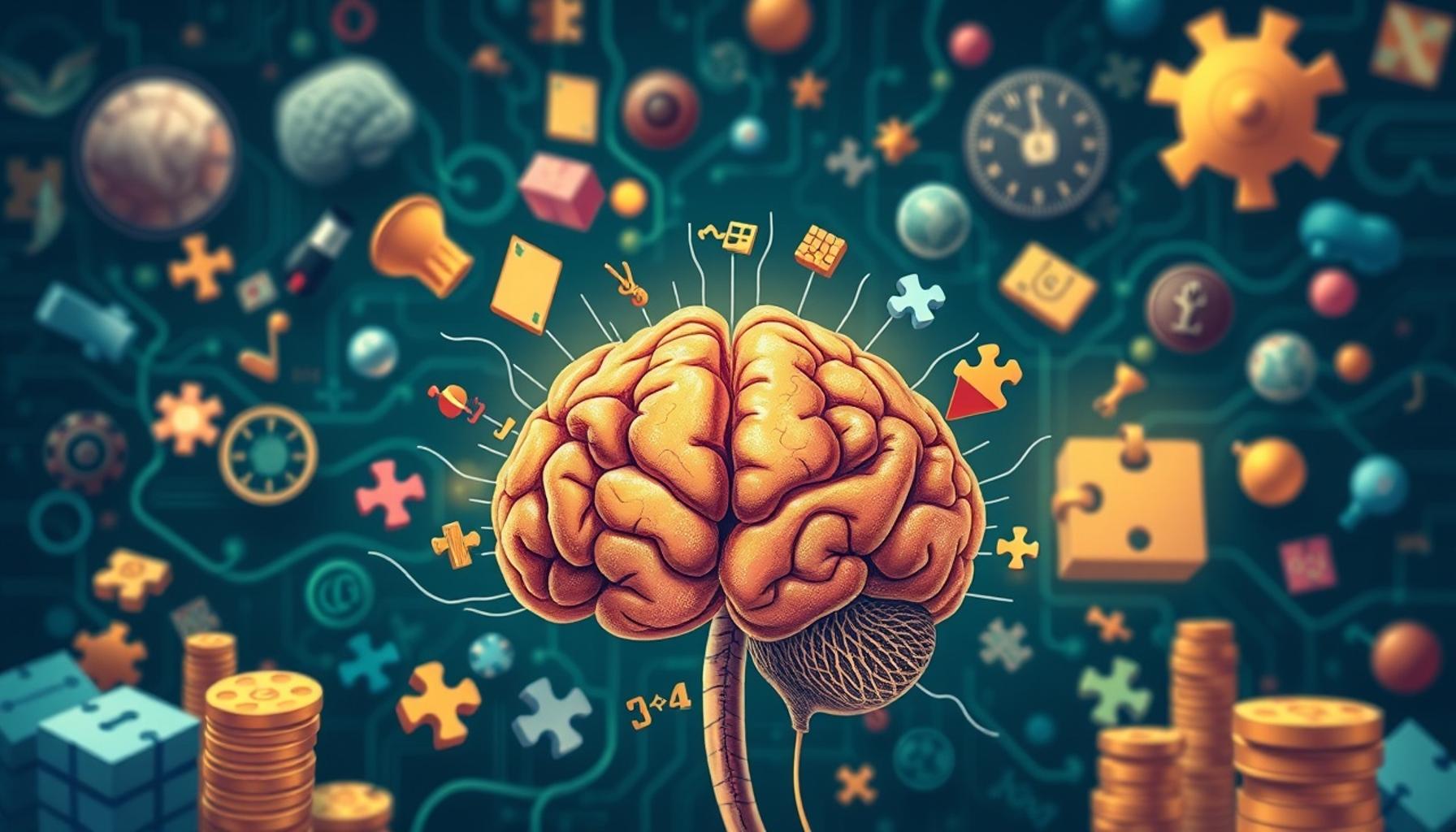
The Cognitive Benefits of Solving Logical Puzzles

Unlocking the Mind’s Potential
In today’s fast-paced world, finding ways to stimulate our brains is more crucial than ever. Engaging in logical puzzles can be an effective and enjoyable method to enhance cognitive functions. These stimulating activities encompass a range of formats, including Sudoku, crosswords, and various brain teasers that challenge the mind and require creative solutions.
Research indicates that regular participation in solving puzzles can lead to a variety of intellectual benefits. Consider the following:
- Improved Problem-Solving Skills: Logical puzzles challenge the mind to think critically, fostering innovative solutions. For instance, a complex Sudoku puzzle pushes an individual to strategize and think ahead, analyzing numbers and patterns. This skill is not only applicable to puzzles but also translates effectively into real-world scenarios, such as tackling workplace challenges or making important decisions.
- Enhanced Memory: The mental effort involved in these activities strengthens memory retention. Engaging with puzzles can help individuals recall information more effectively, a skill that benefits students in their academic pursuits as well as professionals needing to remember important details in meetings.
- Increased Concentration: Focusing on complex puzzles improves attention span and mental clarity. As one immerses themselves in a puzzle, distractions fade away, leading to increased concentration that can be applied to other tasks in daily life, from studying for exams to completing work assignments.
Moreover, solving logical puzzles isn’t just about fun; it’s about promoting mental agility and resilience. Adults and children alike can experience significant cognitive growth by integrating these activities into their daily routine. Many schools across the United States now incorporate puzzle-solving exercises into their curricula, recognizing the importance of nurturing critical thinking skills from a young age. Furthermore, families can bond over shared puzzle-solving efforts, making it both a social activity and a cognitive one.
The findings of various studies highlight that these puzzles can act as a protective measure against cognitive decline. In recent research, it has been shown that individuals who regularly engage in brain-stimulating activities maintain their cognitive functions longer into old age. As a result, they are not only beneficial for individuals looking to sharpen their minds but also play a vital role in mental health, reducing stress and depression symptoms.
Ultimately, embracing the challenge of logical puzzles offers a pathway to enhance our cognitive abilities, leading to a sharper, more innovative mindset. By investing just a few minutes a day in these activities, individuals can reap lifelong benefits. Let’s delve into the profound impacts these activities can have on our brains and consider how implementing them into our daily lives could ultimately reshape our cognitive landscape, leading us to think sharper, act smarter, and live healthier.

DISCOVER MORE: Click here for insights on enhancing your planning skills
Harnessing Your Brain’s Power
The cognitive landscape is often as intricate as the puzzles themselves. Engaging with logical puzzles not only entertains but also cultivates authentic brainpower, revealing surprising benefits that permeate various aspects of life. These mental workouts provide a unique blend of challenges that require both strategic thinking and creative problem-solving. With an array of formats available—be it jigsaw puzzles, riddles, or chess—individuals can discover a world of cognitive enhancement tailored to their interests.
When we dive into the waters of puzzle-solving, we plunge headfirst into a host of mental benefits. These benefits extend far beyond mere enjoyment; they weave into the fabric of our daily lives, helping us think critically and act decisively. Let’s explore some critical cognitive advantages:
- Boosted Logical Reasoning: Logical puzzles serve as a training ground for enhancing logical reasoning skills. As individuals navigate through intricate puzzle requirements, they learn to identify patterns, formulate hypotheses, and implement solutions. This improvement in logical thinking can be crucial for students as they tackle math and science classes, where structured problem-solving is essential.
- Expanded Vocabulary: For those who engage with word puzzles like crosswords or word searches, the rewards include growth in vocabulary and language skills. The brain actively connects new words with existing knowledge, thereby bolstering communication abilities—a fundamental asset in both academic settings and professional environments.
- Enhanced Emotional Intelligence: Solving logical puzzles requires perseverance and patience. As individuals grapple with challenges, they cultivate resilience and emotional regulation. This improvement in emotional intelligence can lead to better interpersonal relationships and collaboration at work or school.
Moreover, the structured nature of puzzles creates a sense of achievement upon completion. This dopamine release, or the “feel-good” neurotransmitter, not only enhances mood but also motivates individuals to tackle more complex challenges in their lives. It can be especially beneficial for students as they prepare for standardized tests or exams, serving as a reward for hard work and dedication.
A growing body of research affirms that people who regularly engage in logical puzzles show remarkable cognitive advantages over their peers. A study conducted at the University of California, for example, points to a correlation between puzzle-solving and improved cognitive flexibility, which is the ability to adapt one’s thinking in light of new information. This adaptability is an increasingly valuable asset in today’s ever-evolving job market.
Incorporating regular puzzle-solving into one’s routine—whether during a coffee break at work, while waiting for appointments, or as part of family game night—can yield tangible returns. The investment is minimal, yet the cognitive dividends are immensely rewarding. Solving logical puzzles cultivates a sharper mind and opens the door to an enriched, more rewarding daily experience.
The Cognitive Benefits of Solving Logical Puzzles
Engaging in logical puzzles isn’t just a pastime; it’s a powerful workout for your brain. When we solve these puzzles, we’re not merely filling in blanks or completing patterns; we are enhancing critical thinking, boosting memory, and improving our overall mental agility. Let’s explore some of these cognitive benefits in further detail.
| Cognitive Skills | Advantages of Puzzles |
|---|---|
| Critical Thinking | Solving logical puzzles enhances the ability to analyze information and make reasoned judgments |
| Memory Enhancement | Regular puzzle-solving exercises improve short-term and long-term memory capabilities. |
| Problem-Solving Skills | Engaging with puzzles fosters a structured approach to problem-solving in everyday life. |
| Increased Concentration | Focusing on puzzles enhances your ability to concentrate for extended periods, improving productivity. |
The benefits extend beyond cognitive skills; solving logical puzzles also provides a sense of achievement and boosts confidence in one’s mental abilities. As we continue to engage in such stimulating activities, we cultivate not only our minds but also our character. Expanding our understanding of these benefits can lead to incorporating more logical puzzle-solving into our daily routines.
DISCOVER MORE: Click here to learn about innovative memory test formats
Unlocking Problem-Solving Skills
The proficiency acquired from solving logical puzzles extends significantly into the realm of problem-solving. As individuals engage with these challenges, they not only learn the mechanics of deciphering clues or assembling pieces but also develop a deeper understanding of the methodology behind structured thought processes. This cognitive training fosters an adaptive mindset that can be advantageous in professional settings, particularly in fields that require analytical reasoning and innovative thinking.
One of the most notable benefits of logical puzzle-solving is its capacity to enhance critical thinking skills. This skill set is essential in today’s fast-paced world, where situational analysis and decision-making often need to happen in real-time. Participants learn to interrogate premises, assess evidence, and draw conclusions through engaging with varied puzzles. For instance, a study published in the Journal of Educational Psychology found that students who engage with logic-based games scored higher on standardized tests assessing critical thinking than those who didn’t. Such findings suggest that even a modest investment of time in puzzles can lead to amplified cognitive abilities.
- Increased Attention to Detail: Logical puzzles demand a level of scrutiny and focus that can enhance attention to detail. A simple slip in judgment can derail an entire solving process, prompting solvers to develop a more meticulous approach in their daily tasks. For instance, professionals involved in data analysis may find that regularly engaging with puzzles can translate into more accurate assessments and identifying anomalies that others might overlook.
- Sharpened Memory Skills: Different puzzle types, particularly those involving memory recall, such as Sudoku or memory card games, inherently strengthen memory retention. Solvers frequently exercise their short-term memory and improve their retrieval skills, thus becoming better at remembering important information in other areas of life, from academic lessons to workplace strategies.
The benefits of puzzle-solving aren’t confined to youthful minds; adults and seniors also reap rewards from this cognitive exercise. Research conducted at the University of Florida suggests that older adults who engage in regular mental challenges, including logical puzzles, experience a slower rate of cognitive decline. By maintaining an active engagement with their cognitive faculties, individuals can preserve memory function and enhance overall mental sharpness well into their golden years.
Furthermore, collaborative puzzle-solving can amplify these advantages. Group activities such as escape rooms or team-based puzzles encourage effective communication, shared problem-solving, and the collective satisfaction of achieving goals. This collaborative aspect not only fosters interpersonal skills but can also simulate various social dynamics, advantageous in both academia and professional settings. Organizational behavior studies have shown that teams that engage in problem-solving activities outperform their counterparts who do not practice such exercises.
Studies conducted by the American Psychological Association also point to the link between logical puzzle-solving and increased creativity. The process of approaching a problem from various angles hones creative faculties, making it easier for solvers to think outside the box in real-world scenarios—a skill particularly coveted in today’s innovation-driven job market.
The escalating trend of incorporating puzzles into educational curriculums highlights a growing recognition of their cognitive benefits. Many educators now utilize logical puzzles not just as a means of entertainment but as invaluable tools for nurturing students’ intellectual skills. This movement showcases a broader societal acknowledgment of the importance of mental fitness, propelling a culture where brain exercise becomes as crucial as physical exercise.
EXPLORE MORE: Click here to dive deeper
Conclusion: Embracing the Power of Puzzles
The exploration of cognitive benefits derived from solving logical puzzles reveals a treasure trove of advantages that extend far beyond mere entertainment. As we’ve seen, engaging with these thought-provoking challenges promotes the development of essential skills, including enhanced critical thinking, increased attention to detail, and improved memory retention. Such cognitive exercises are not only vital for students but also play a significant role in maintaining mental acuity in adults and seniors alike. The findings of institutions like the University of Florida emphasize that mental engagement, such as puzzle-solving, can slow cognitive decline, ensuring lasting benefits well into one’s golden years.
The collaborative aspect of puzzles further amplifies these benefits, encouraging teamwork, effective communication, and innovative thinking. As workplaces increasingly value creativity and adaptability, the skills cultivated through problem-solving activities align perfectly with the demands of the modern job market. Consequently, the integration of logical puzzles into educational practices signifies a progressive shift towards nurturing holistic intellectual growth in learners of all ages.
In a world where mental fitness is increasingly recognized as integral to overall well-being, embracing logical puzzles as a regular part of life offers a compelling pathway to sharpen the mind and enhance cognitive abilities. Therefore, whether you are an educator, a professional, or simply a puzzle enthusiast, investing time in these challenging exercises can yield substantial benefits, fostering a more insightful and agile mind. So, why not challenge yourself today with a puzzle? The cognitive rewards just might surprise you.
Related posts:
Deconstructing Modern Puzzles: The Influence of Technology on Logical Challenges
Classic Logical Challenges: Solving Puzzles that Test Your Mind
The Psychology Behind Logical Challenges: How They Impact Our Perception and Decision-Making
How Logical Challenges Can Improve Decision-Making in Everyday Life
The Science Behind Logic Games: How They Enhance Creativity and Problem Solving
Classical Logical Challenges: History and Evolution of Mind Games

Linda Carter is a writer and puzzle expert specializing in mind games, brain teasers, and cognitive challenges. With extensive experience helping individuals enhance their problem-solving skills and think critically, Linda shares her knowledge on our platform. Her goal is to empower readers with practical advice, engaging puzzles, and strategies to sharpen their minds and achieve success in the captivating world of mind games and puzzles.