The Psychology Behind Brain Teasers: How They Stimulate the Brain
The Fascinating World of Brain Teasers
Brain teasers represent a unique intersection of entertainment and cognitive enhancement. These engaging challenges stimulate various areas of the brain, promoting mental agility and offering profound insights into human cognition. By engaging with brain teasers, individuals of all ages can experience improvements in multiple cognitive areas, making this activity not only enjoyable but also beneficial for one’s mental health.
Enhancing Problem-Solving Skills
Enhancing problem-solving skills is one of the most significant benefits of engaging with brain teasers. These puzzles require individuals to think outside the box, encouraging creative thinking and innovative solutions. For example, a classic logic puzzle might present a scenario involving several suspects and prompts the solver to deduce the culprit based on a series of clues. By dissecting these clues and experimenting with various hypotheses, individuals learn to approach problems methodically and creatively, skills that are directly transferable to real-world challenges, from workplace dilemmas to everyday decisions.
Improving Memory
Regular practice with brain teasers also aids in improving memory. Activities like memorizing sequences or recalling details from complex word games have been shown to boost memory retention and recall. Research suggests that engaging in memory-enhancing exercises can slow cognitive decline as we age. For instance, the widely popular game “Simon” requires players to remember and replicate increasingly complex color patterns. Such activities reinforce memory pathways in the brain, making them sharper over time.
Boosting Attention Span
In today’s fast-paced digital world, boosting attention span is more crucial than ever. The complex nature of certain puzzles demands intense focus, training the brain to concentrate for extended periods. Consider sudoku, a number-based logic game that requires players to fill a grid according to specific rules. To successfully complete such puzzles, one must maintain focus and resist distractions, thereby enhancing their ability to concentrate in other aspects of life, including work and studies.
The Psychology of Brain Teasers
The psychology behind brain teasers can be attributed to the delicate balance of frustration and reward. When faced with a challenge, individuals often experience a surge of dopamine upon successfully solving a puzzle. This chemical reaction not only brings a sense of accomplishment but also reinforces the desire to engage in more brain teaser activities. This phenomenon explains why many people find themselves captivated by riddles and logical challenges, often leading them down a rabbit hole of increasingly difficult tasks.
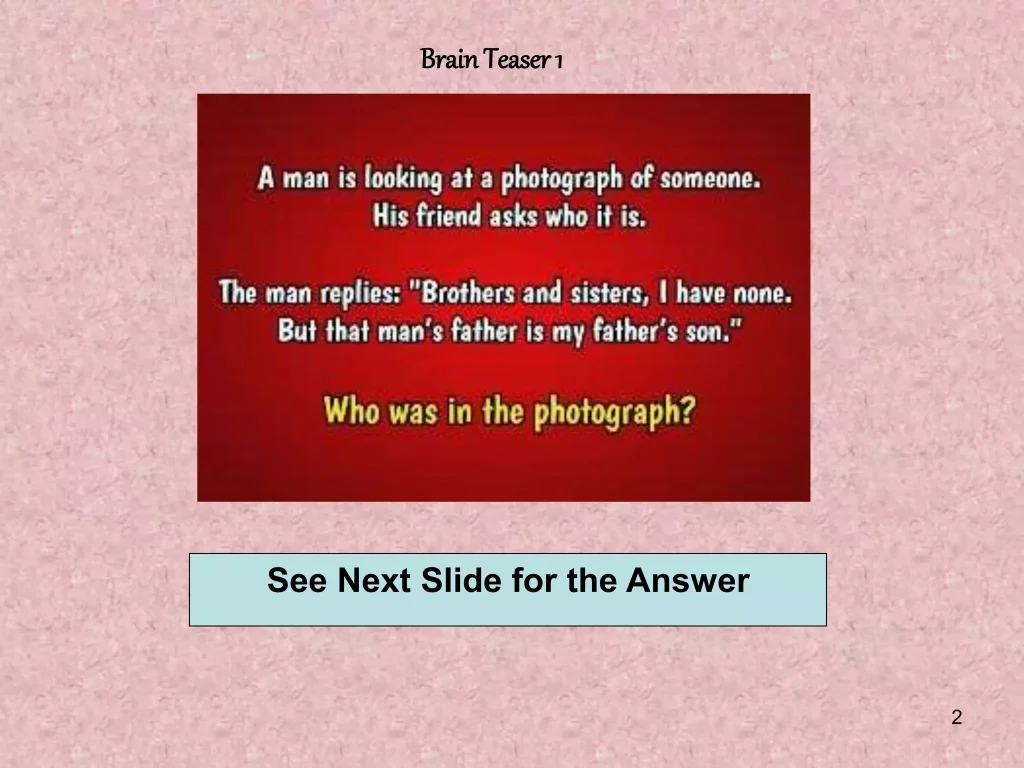
Classification of Brain Teasers
Brain teasers can be categorized into various types, each stimulating different cognitive faculties. Some common classifications include:
- Logic puzzles: These require reasoning to solve, often presenting scenarios that challenge the solver’s deductive reasoning capabilities.
- Word games: Engaging with vocabulary and language, these games, like Scrabble and crossword puzzles, enhance verbal skills and linguistic creativity.
- Mathematical riddles: Focused on engaging numerical skills and analytical thinking, puzzles like algebraic equations can sharpen quantitative reasoning.
As we delve deeper into the world of brain teasers, it becomes evident that these exercises are not only a source of entertainment but also a significant contributor to mental fitness across all ages. Engaging in these puzzles provides an opportunity to sharpen the mind, build problem-solving skills, and unlock the mysteries of cognitive function. So, embrace the challenge, and prepare to enhance your brain’s potential through the enjoyment of brain teasers!
DIVE DEEPER: Click here to learn more
Cognitive Engagement through Brain Teasers
Brain teasers are not just mere puzzles; they are a complex combination of cognitive engagement that challenges the brain on multiple levels. This intriguing intersection of fun and mental exercise stems from our inherent need for problem-solving and mental stimulation. As individuals tackle various types of brain teasers, they activate numerous mental faculties, including logical reasoning, verbal skills, and spatial awareness, each contributing to a well-rounded cognitive arsenal.
The Role of Neuroplasticity
At the heart of the psychological benefits of brain teasers lies neuroplasticity, the brain’s remarkable ability to reorganize itself by forming new neural connections. Engaging in brain teasers regularly can enhance cognitive flexibility, allowing the brain to adapt and optimize its pathways. A study published in the “Journal of Neuroscience” revealed that tasks promoting cognitive challenges lead to significant structural brain changes over time. This implies that actively working on brain teasers may not only improve immediate problem-solving skills but also contribute to long-term mental resilience and cognitive aging, making it a valuable practice throughout one’s life.
Creating Cognitive Dissonance
Brain teasers also create a state of cognitive dissonance—a mental discomfort that arises when individuals encounter challenges that don’t conform to their usual thought processes. This feeling often pushes the solver to restructure their thinking patterns, prompting deeper engagement. Moreover, the act of grappling with a tricky puzzle produces a sense of accomplishment once resolved, reinforcing the brain’s reward pathway. This mechanism of reward encourages individuals to tackle even more complex challenges, creating a cycle of continual cognitive growth.
Types of Cognitive Skills Developed
Engaging with brain teasers is an effective way to foster a variety of cognitive skills. Here are some essential cognitive abilities that brain teasers can enhance:
- Critical Thinking: Analyzing and evaluating information to solve puzzles promotes critical thinking and logical reasoning.
- Spatial Reasoning: Many puzzles require visualizing movements or scenarios, which strengthens spatial awareness and understanding.
- Decision-Making: Navigating choices during problem-solving exercises enhances decision-making capabilities, vital in both personal and professional spheres.
- Creativity: Brain teasers stimulate innovative thoughts, encouraging outside-the-box thinking.
As we can see, brain teasers are much more than a casual pastime. They present an opportunity to sharpen critical cognitive skills, encourage neuroplasticity, and foster resilience against cognitive decline—all while delivering a satisfying challenge. The psychological underpinnings of these puzzles reveal the incredible potential our brains have for growth and adaptation, illuminating the fascinating ways in which engaging with brain teasers can positively influence our mental faculties.
The Power of Brain Teasers
Brain teasers serve as a fascinating intersection between leisure and mental exercise. Engaging with these puzzles is not merely a source of entertainment; it actively stimulates various cognitive functions. The complexities of brain teasers challenge individuals to think critically and develop problem-solving skills. This form of cognitive engagement can lead to enhanced mental flexibility, allowing individuals to adapt to new situations and approach challenges from unique perspectives.When individuals tackle brain teasers, they tap into a range of cognitive processes, including memory, reasoning, and analytical skills. The neuroplasticity phenomenon is particularly significant here; as the brain encounters challenges, it forms new neural connections. Regularly engaging with brain teasers can promote long-term mental health by contributing to sharper memory and increased creativity.h3>Types of Brain Teasers
Various types of brain teasers exist, each targeting different facets of cognition. Riddles, logic puzzles, and mathematical challenges each engage distinct thought processes. For example, logic puzzles often enhance deductive reasoning, whereas riddles promote lateral thinking. By diversifying the types of brain teasers one engages with, individuals can experience a broader range of cognitive benefits.Furthermore, the social aspect of solving brain teasers cannot be overlooked. Collaborative efforts in groups stimulate not just individual cognition but also teamwork and communication skills. This interaction can further deepen understanding and enjoyment, creating a rich, immersive experience. In addition to personal development, there is growing evidence suggesting that engaging in brain teasers can reduce the chances of cognitive decline as one ages. By becoming adept at solving these puzzles, individuals fortify their minds against the wear and tear of time, making it a valuable practice.
Exploring the Neuroscience
Neuroscience plays a critical role in understanding why brain teasers are so effective in stimulating the brain. Engaging in problem-solving activates specific brain areas associated with cognitive functions, including the prefrontal cortex. Studies have shown that enjoyable cognitive challenges can elevate levels of dopamine, a neurotransmitter tied to feelings of pleasure and motivation. Thus, as individuals tackle brain teasers, they not only exercise their minds but also enhance their mood, making the experience rewarding.In conclusion, as we delve deeper into the psychology behind brain teasers, we uncover a realm rich with cognitive benefits that extend beyond mere entertainment. The act of solving these challenges is, in essence, a workout for the brain, promoting mental agility and longevity. The joy derived from these puzzles, combined with their profound impact on cognitive health, makes them an essential activity for anyone keen on maintaining an active mind.
| Category | Advantages |
|---|---|
| Cognitive Stimulation | Enhances critical thinking and problem-solving skills. |
| Neuroplasticity | Encourages the formation of new neural connections. |
| Social Interaction | Promotes teamwork and effective communication. |
| Mood Enhancement | Increases dopamine levels, leading to improved mood. |
| Cognitive Longevity | May help reduce the risk of cognitive decline with age. |
DISCOVER MORE: Click here to dive deeper
Enhancing Memory and Learning through Puzzles
In addition to fostering critical thinking and cognitive skills, brain teasers play a crucial role in enhancing memory and learning processes. When individuals engage with these stimulating puzzles, they activate and strengthen neural networks associated with memory retention and recall. A study published in the “Psychological Science” journal noted that individuals who regularly practice problem-solving and memory games exhibit better short-term memory compared to those who do not. By challenging oneself with brain teasers, the brain learns to encode, store, and retrieve information more efficiently, leading to improved overall cognitive function.
The Impact of Stress on Cognitive Performance
Interestingly, brain teasers also provide a form of stress relief, which can positively affect cognitive performance. In a high-pressure environment, the brain can become cluttered and overwhelmed, leading to a decline in productivity and mental clarity. Engaging with brain teasers can serve as a mental break, allowing for a reset and reduced anxiety. Research from the “Journal of Experimental Psychology” found that individuals who took short breaks to engage in mentally stimulating activities like brain teasers performed significantly better in tasks that followed. This highlights the importance of incorporating such activities into daily routines to maintain cognitive health amidst everyday stressors.
Social Interaction and Group Challenges
Brain teasers can also be enjoyed in a social setting, further amplifying their psychological benefits. Participating in group problem-solving exercises fosters collaboration and camaraderie, helping to improve communication skills and build relationships. According to a survey conducted by the American Psychological Association, activities that provoke teamwork enhance emotional well-being and contribute to positive interpersonal connections. Group brain teaser challenges are not only fun but also act as an outlet for healthy competition, creating an environment for collective cognitive growth.
Cultivating Patience and Persistence
Succeeding at brain teasers often requires a level of patience and persistence that is applicable in many areas of life. While attempting to solve a particularly perplexing puzzle, individuals learn the value of resilience—the ability to confront challenges with determination. This persistence translates into real-life situations, enabling individuals to approach difficulties with a renewed mindset, armed with problem-solving techniques honed through puzzle engagement. Moreover, the iterative approach of trial and error when solving brain teasers cultivates a growth mindset, which encourages embracing challenges as opportunities for learning.
In summary, brain teasers serve as a multifaceted tool for cognitive enhancement and psychological well-being. From promoting memory retention to providing a playful escape from stress, these puzzles offer numerous benefits that extend beyond mere entertainment. Their role in enhancing social interaction and cultivating vital personality traits such as patience and persistence further underscores their importance in our cognitive lives. With the ever-increasing need for mental agility in today’s fast-paced world, the exploration of brain teasers emerges as not only beneficial but essential for nurturing our minds.
DIVE DEEPER: Click here to learn more
Conclusion: The Multifaceted Benefits of Brain Teasers
In the exploration of brain teasers and their psychological underpinnings, it’s clear that these engaging puzzles offer a wealth of benefits that go beyond just entertainment. They serve as powerful tools for cognitive enhancement, stimulating memory and learning while fostering critical thinking skills. Moreover, the stress-relieving properties of brain teasers can lead to improved mental clarity and productivity, making them a valuable resource in both personal and professional settings.
Social interactions surrounding brain teasers further enrich the experience, as they encourage teamwork and collaboration, ultimately enhancing emotional well-being. As individuals tackle these challenges collectively, they not only strengthen their relationships but also curate an enriching environment for cognitive growth. Additionally, the persistence required to solve brain teasers cultivates resilience and a growth mindset, essential traits in overcoming not just puzzles, but life’s various challenges.
In a world that increasingly values mental agility, incorporating brain teasers into daily activities appears more than just a whimsical pastime; it represents a crucial strategy for nurturing cognitive health. As research continues to unveil the intricate connections between brain activities and psychological benefits, it becomes evident that embracing these challenges is not only enjoyable but potentially transformative. So why not dive into the world of brain teasers? Your mind may just thank you for the workout it desperately needs.
Related posts:
Integrating Brain Teasers into Your Daily Routine: Practical Tips to Stimulate the Brain
The Cognitive Benefits of Solving Brain Teasers
Classic vs. Modern Brain Teasers: A Comparison of Challenges and Strategies
Exploring the History and Evolution of Brain Teasers in Culture
The Role of Brain Teasers in Boosting Creativity and Lateral Thinking
Brain Teasers and Creativity: Stimulating Innovative Thinking

Linda Carter is a writer and puzzle expert specializing in mind games, brain teasers, and cognitive challenges. With extensive experience helping individuals enhance their problem-solving skills and think critically, Linda shares her knowledge on our platform. Her goal is to empower readers with practical advice, engaging puzzles, and strategies to sharpen their minds and achieve success in the captivating world of mind games and puzzles.